
How to study for your permit test
An order of work that beats grinding random questions: read one topic in the handbook, practice that same topic, and spend the rest of your time on the answers you got wrong.
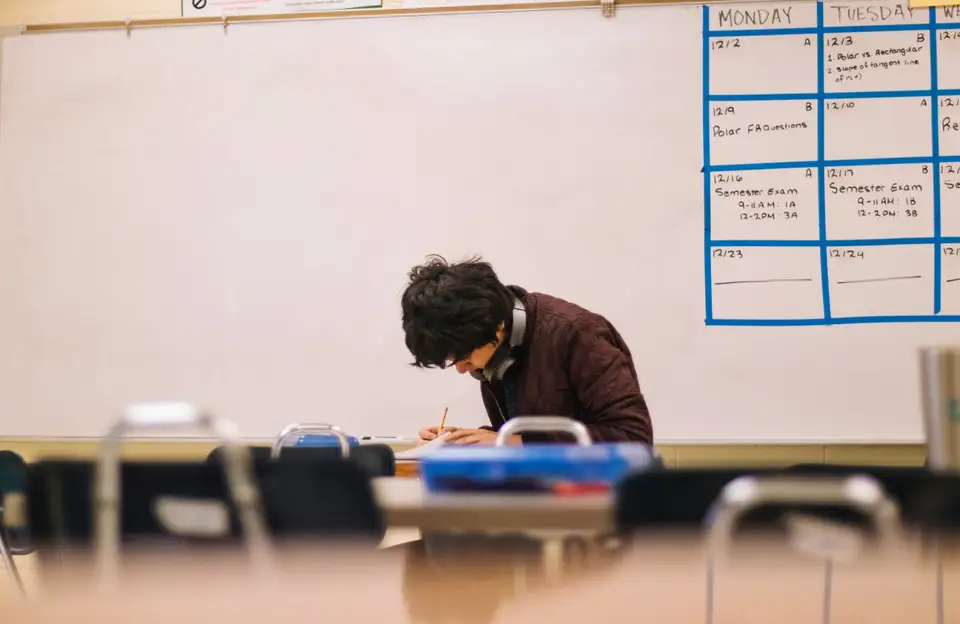
Start with the handbook, not with questions
No licensing agency publishes the questions on its written test, and every one of them publishes the book the questions are written from: the driver handbook for that state. California puts it in one line on its own page about preparing for the tests, and it is the same everywhere: what you are asked comes out of that book.
That changes what practice questions are for. They are not the syllabus, they are the measurement. A question tells you whether a rule is in your head; the handbook is what puts it there. People who only run practice tests end up learning the wording of the practice questions, which is the one thing that is guaranteed not to be on the real test.
The other extreme does not work either. Reading a hundred pages front to back in one sitting leaves you with a warm feeling and nothing you can recall under pressure. The unit that works is a section: read it, close it, and answer questions about it while it is still fresh.
Study one topic at a time
Handbooks are already organized the way the test thinks: signs and signals, right of way, speed, turns and lanes, sharing the road, safe driving, alcohol and drugs, and the paperwork side of holding a license. Take one of those, read it, then answer only questions from that topic.
Working inside one topic is what makes the differences visible. Read the right-of-way pages and the four or five situations that look alike stop looking alike: an intersection with no signs, a T intersection, a left turn across traffic, a roundabout. Mixed in with random questions about tires and insurance, those four never line up next to each other, and the distinctions never form.
A topic is also the right size to finish. You can read it and practice it in one sitting, which means you end the session knowing something rather than having covered ground.
Let your mistakes choose the next session
A wrong answer is the most useful thing that happens while you study, and it gets thrown away the fastest. The score of a practice test is almost worthless information; the list of what you missed is the study plan for tomorrow.
So do the boring part: after every attempt, go back over the ones you got wrong and read the explanation until you can say why the answer you chose is wrong. Not why the right one is right, which is easy to accept, but why yours is wrong. That is the part that transfers to a differently worded question.
Then repeat only those. A second pass over the same twelve questions you failed is worth more than a fresh attempt at thirty-six you mostly know, and it takes a quarter of the time.
Treat the numbers as their own topic
Distances, speeds, ages, deadlines and fines are the easiest thing to test, because there is nothing to argue about: either you know the number or you do not. They are also the easiest thing to mix up, because every handbook has dozens of them and many are close together.
Numbers do not stick when you meet them one at a time, scattered through a week of reading. They stick when you see them side by side and notice the pattern: the distances that come in hundreds of feet, the ones that come in tens, the ones measured in seconds. Make one list of every number in your state's handbook and study it as a list, separately from the rules.
When two numbers keep swapping in your head, do not try harder. Find what makes them different, ideally something physical: a distance you signal before turning is short because it happens in town, a distance you signal before leaving a freeway is long because everything there takes longer.
The last two days
Two days out, stop adding topics. Anything you have not read by then is not going to be learned well enough to survive a test, and the attempt to learn it will cost you the rules you already had.
Spend that time on two things: your list of missed questions, and the numbers. Both are recall problems, which is exactly what the last two days are good for.
Then take one full practice attempt, start to finish, without pausing to look anything up. Not for the score. For the experience of reading thirty-something questions in a row and staying careful on the last one, which is where the mistakes happen.
Sources
How we write and check this material: our methodology.