
Road sign games for the permit test
Signs are learned by looking at them, again and again, until the picture brings up the rule on its own. These three games do that with 54 of the signs you will see on US roads.
-
Recognition
Sign memory
Flip two cards at a time and find the pairs. Each pair you find shows what that sign asks of you.
Play → -
Meaning
Match the sign
Six signs, six meanings, and every meaning is a real one. Pair each sign with what it asks you to do.
Play → -
Speed
Sign sprint
One minute, one sign at a time, three meanings to pick from. At the end you get the list of the ones you missed.
Play →
Which game to play
If the signs still look alike to you, start with sign memory. Finding pairs makes you study each drawing closely, and the meaning only appears once you have placed it.
If you can tell them apart but mix up which is which, go to match the sign. All six meanings on the board are real, so there is no obviously wrong option to lean on.
If you think you have them down, try the sign sprint. A minute is too short to reason things out, and the list of misses at the end tells you exactly what to review.
All three let you play with every sign or only one family, regulatory or warning, which helps when one kind is giving you more trouble than the other. Nothing is saved and there is nothing to sign up for.
The signs in the games
All 54, grouped the way the road groups them: by what the shape and color tell you before you can read the words. Under each meaning is the section of the federal Manual on Uniform Traffic Control Devices that defines the sign and, when the California Driver's Handbook covers the sign or its rule, the page where it does.
Regulatory signs (18)
Red, white and black. They give an order: stop, yield, do not enter, no turns, the speed limit.
-
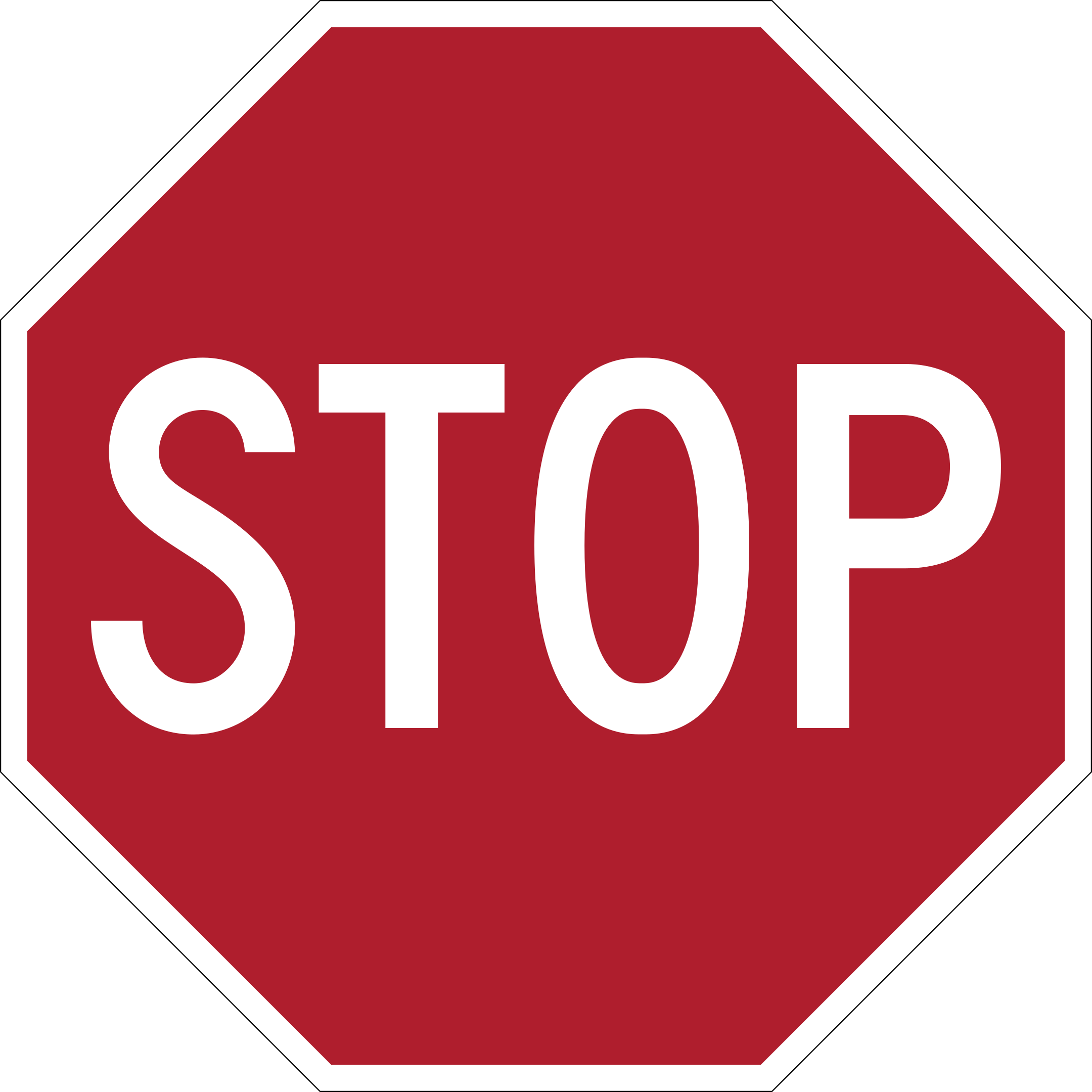
Stop
Come to a full stop, then go when it is safe.
Red octagon with the word STOP · CA handbook p. 35 · MUTCD 2B.04
-
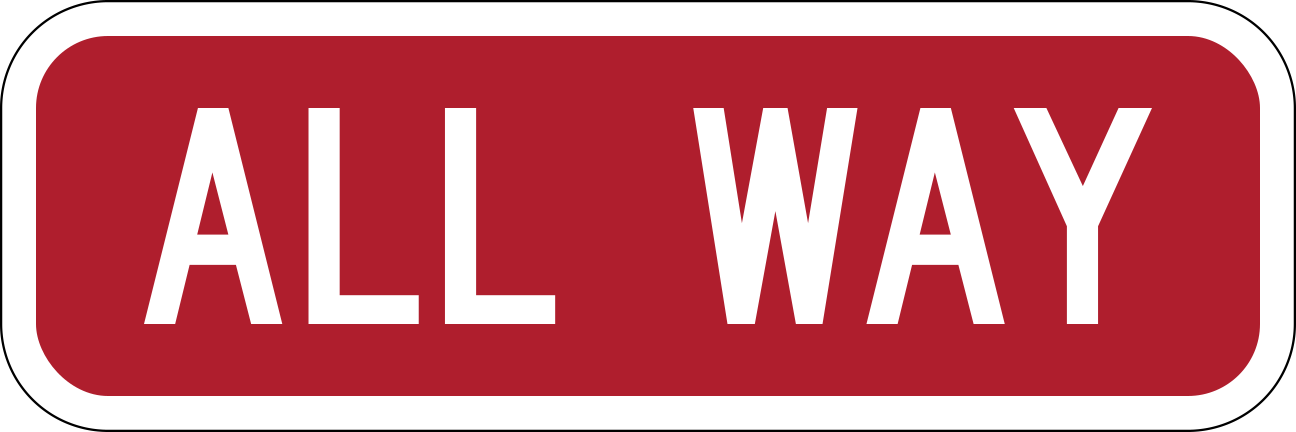
All-way (under a stop sign)
Every road into this intersection has a stop sign, not only yours.
Red plaque reading ALL WAY, below a stop sign · MUTCD 2B.04
-
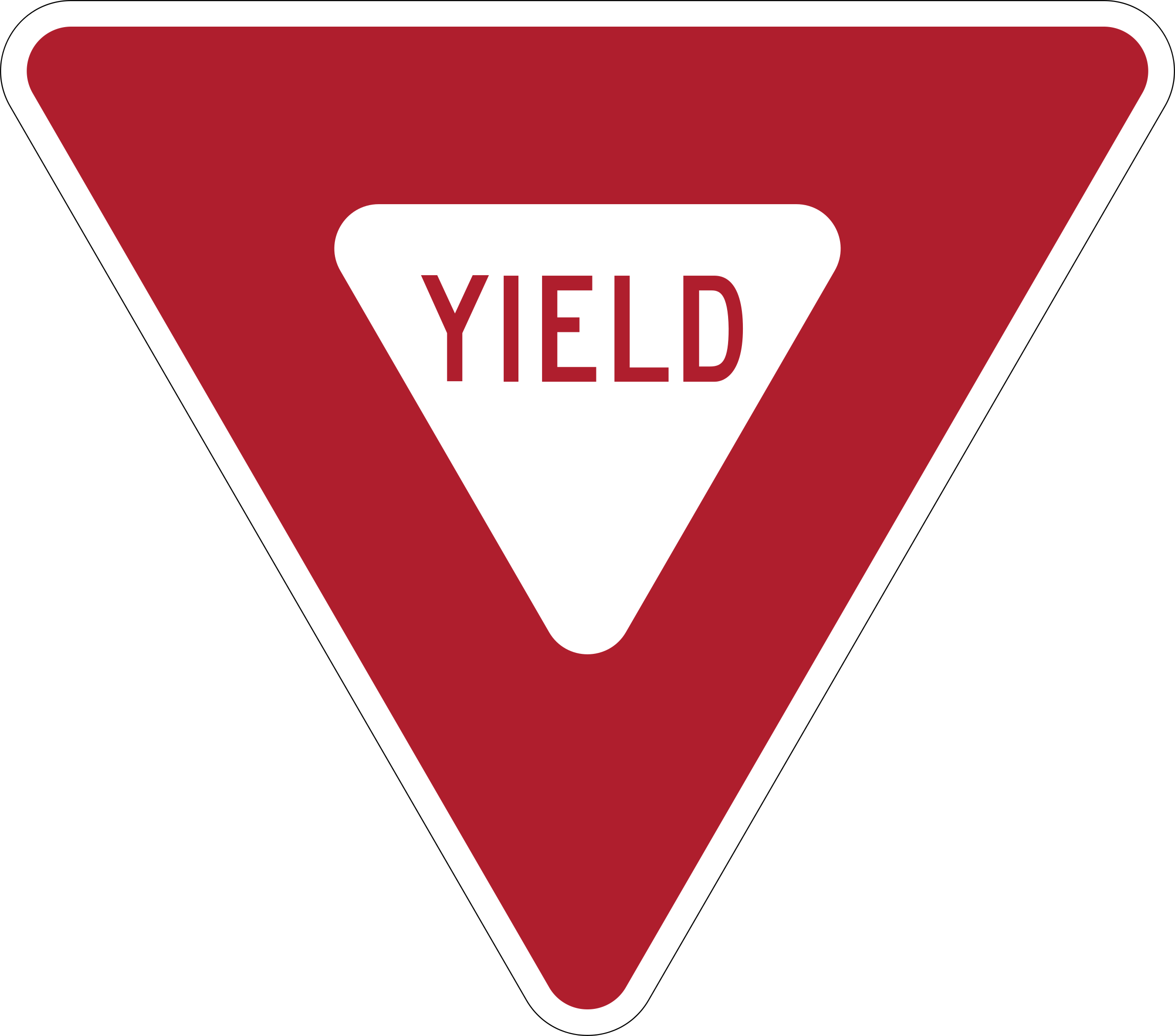
Yield
Slow down, and stop if you need to, so others can go before you.
Red and white triangle, point down, with the word YIELD · CA handbook p. 35 · MUTCD 2B.05
-
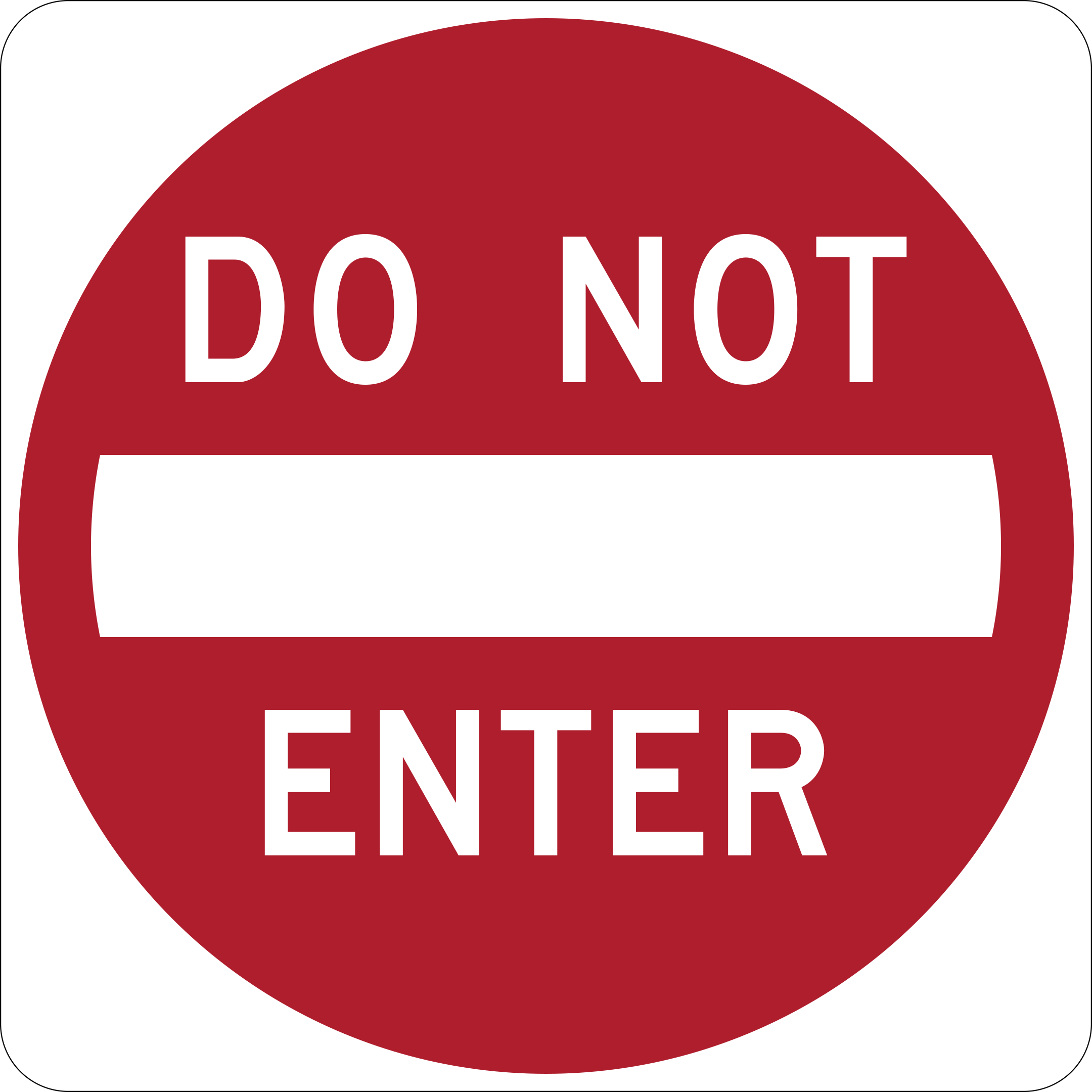
Do not enter
That road or ramp is closed to you from this direction.
Red circle with a white bar and the words DO NOT ENTER · CA handbook p. 38 · MUTCD 2B.46
-
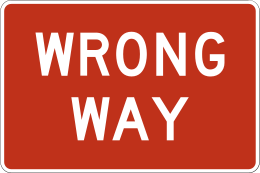
Wrong way
You are driving against traffic: get out once it is safe.
Red rectangle with the words WRONG WAY · CA handbook p. 38 · MUTCD 2B.47
-
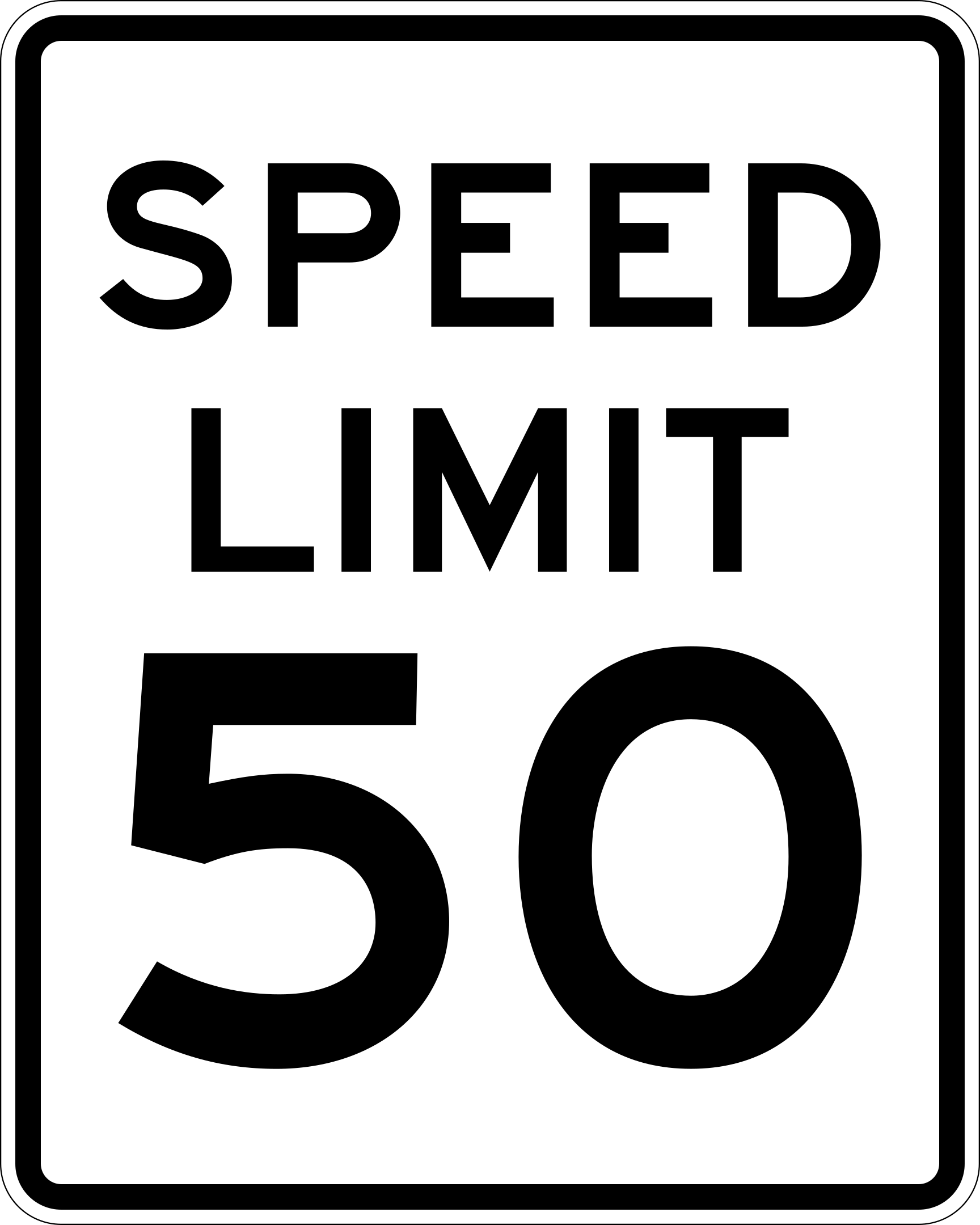
Speed limit
The top legal speed on this road, and slower when conditions call for it.
White vertical rectangle with the words SPEED LIMIT and a number · CA handbook p. 67 · MUTCD 2B.21
-
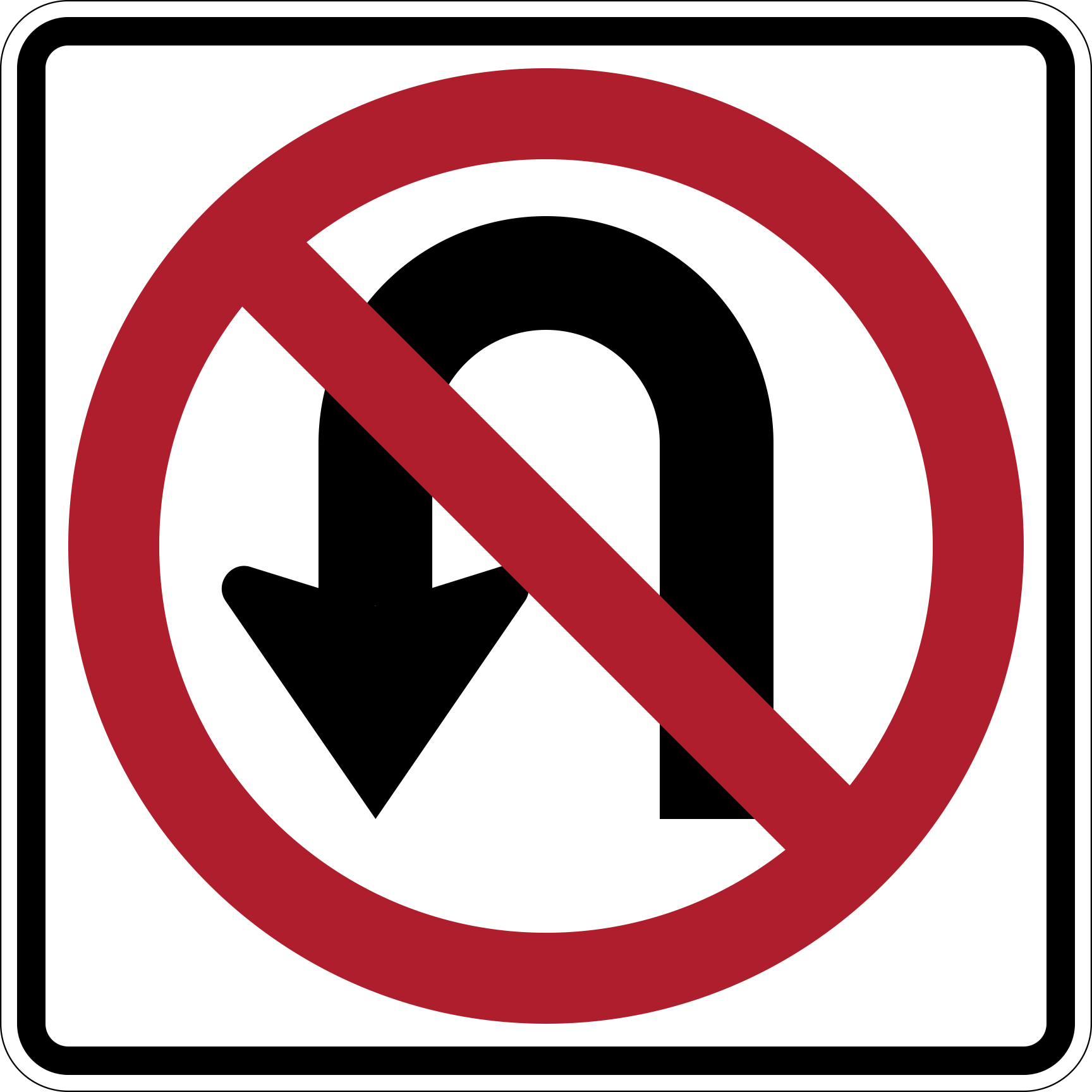
No U-turn
Do not turn around here.
U-turn arrow inside a red circle with a slash · CA handbook p. 20 · MUTCD 2B.26
-
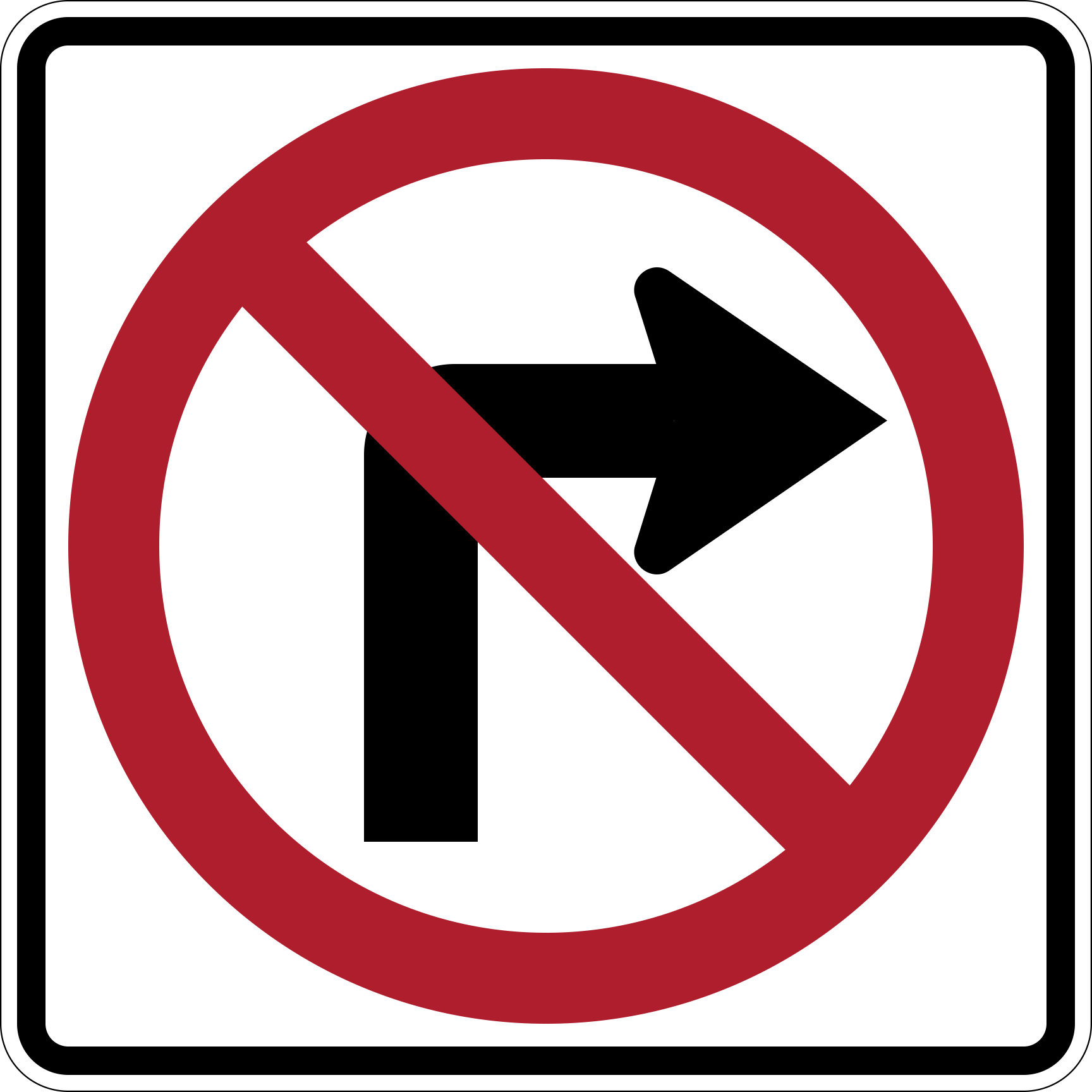
No right turn
Right turns are not allowed here.
Right arrow inside a red circle with a slash · CA handbook p. 36 · MUTCD 2B.26
-
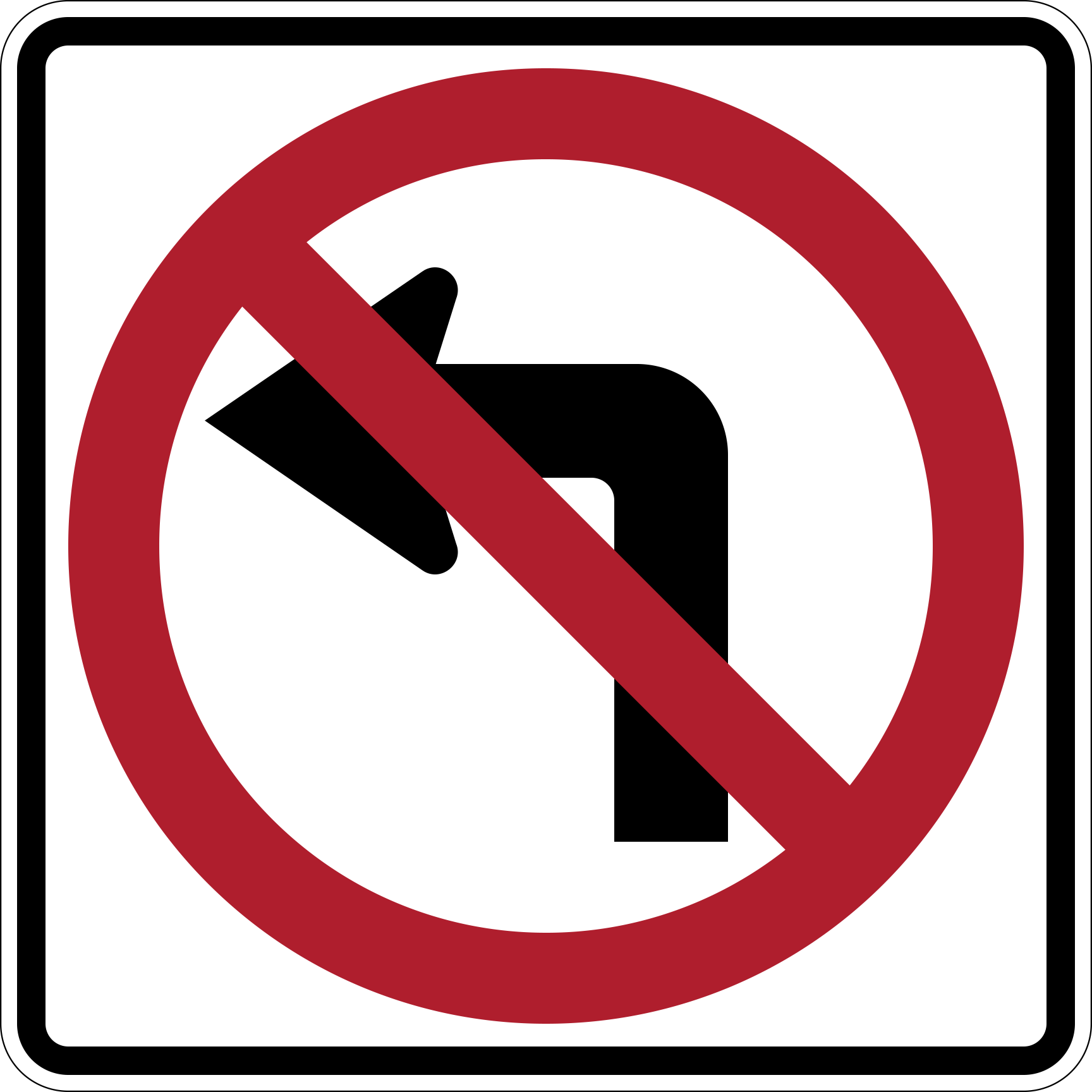
No left turn
Left turns are not allowed here.
Left arrow inside a red circle with a slash · CA handbook p. 36 · MUTCD 2B.26
-
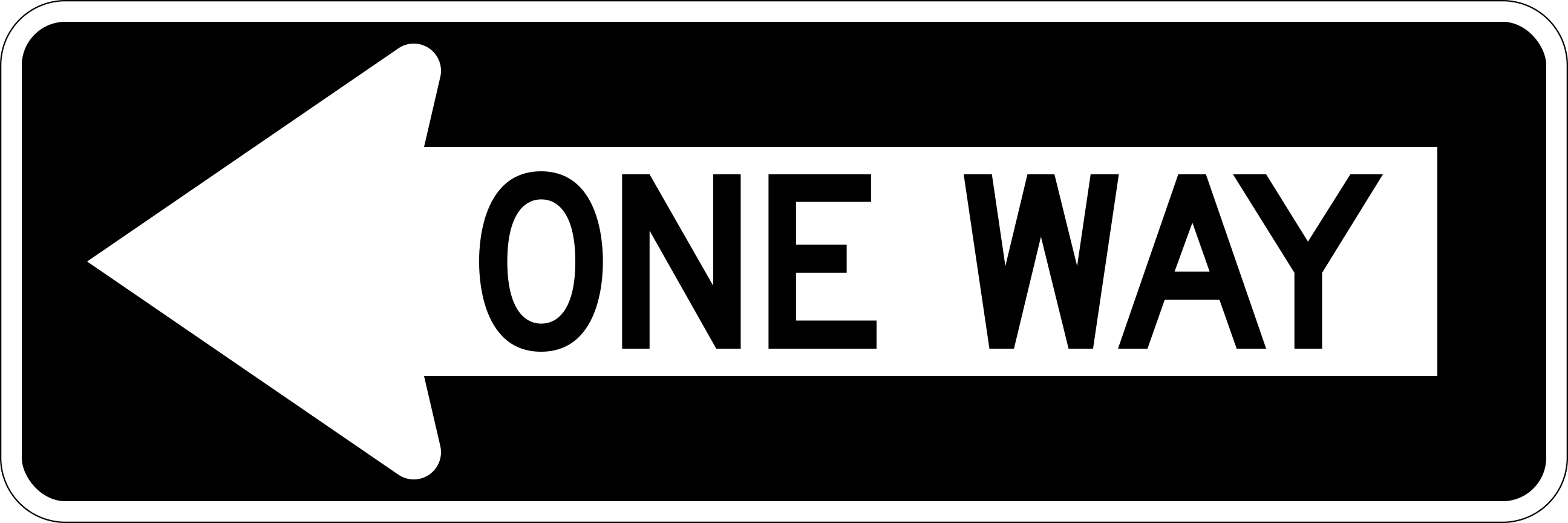
One way
Traffic on this street moves only in the direction of the arrow.
Black rectangle with a white arrow and the words ONE WAY · CA handbook p. 36 · MUTCD 2B.49
-
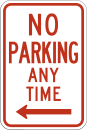
No parking any time
You may not park here at any hour of any day.
White rectangle with red letters: NO PARKING ANY TIME · CA handbook p. 28 · MUTCD 2B.52
-
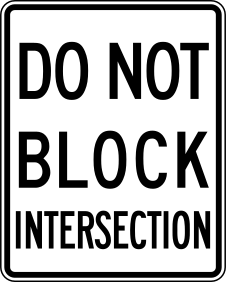
Do not block intersection
Wait before the intersection unless you can get all the way across.
White rectangle with the words DO NOT BLOCK INTERSECTION · CA handbook p. 36 · MUTCD 2B.59
-
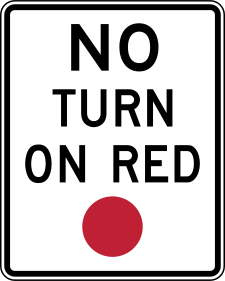
No turn on red
While the light is red you may not turn: wait for green.
White rectangle with the words NO TURN ON RED · CA handbook p. 18 · MUTCD 2B.60
-
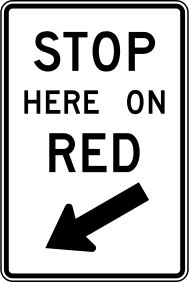
Stop here on red
On a red light, stop at the line the arrow points to.
White rectangle with the words STOP HERE ON RED and an arrow · CA handbook p. 18 · MUTCD 2B.59
-
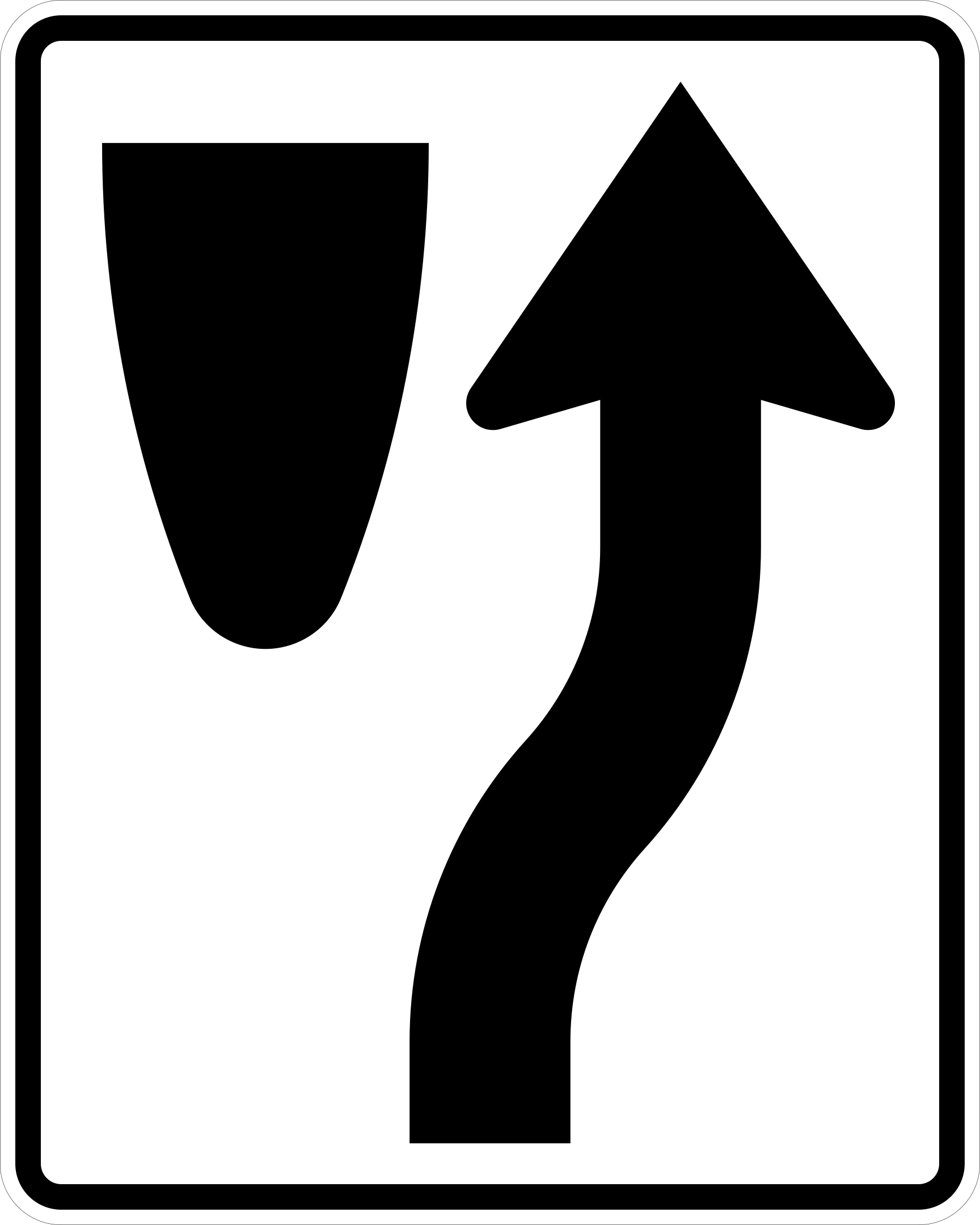
Keep right
Pass the island or obstacle ahead only on its right side.
White rectangle with an arrow around an island · MUTCD 2B.39
-
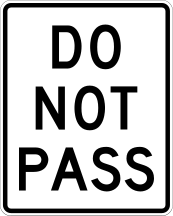
Do not pass
Passing other vehicles is not allowed along this stretch.
White rectangle with the words DO NOT PASS · MUTCD 2B.36
-
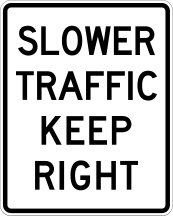
Slower traffic keep right
If you are moving slower than the traffic around you, use the right lane.
White rectangle with the words SLOWER TRAFFIC KEEP RIGHT · MUTCD 2B.38
-
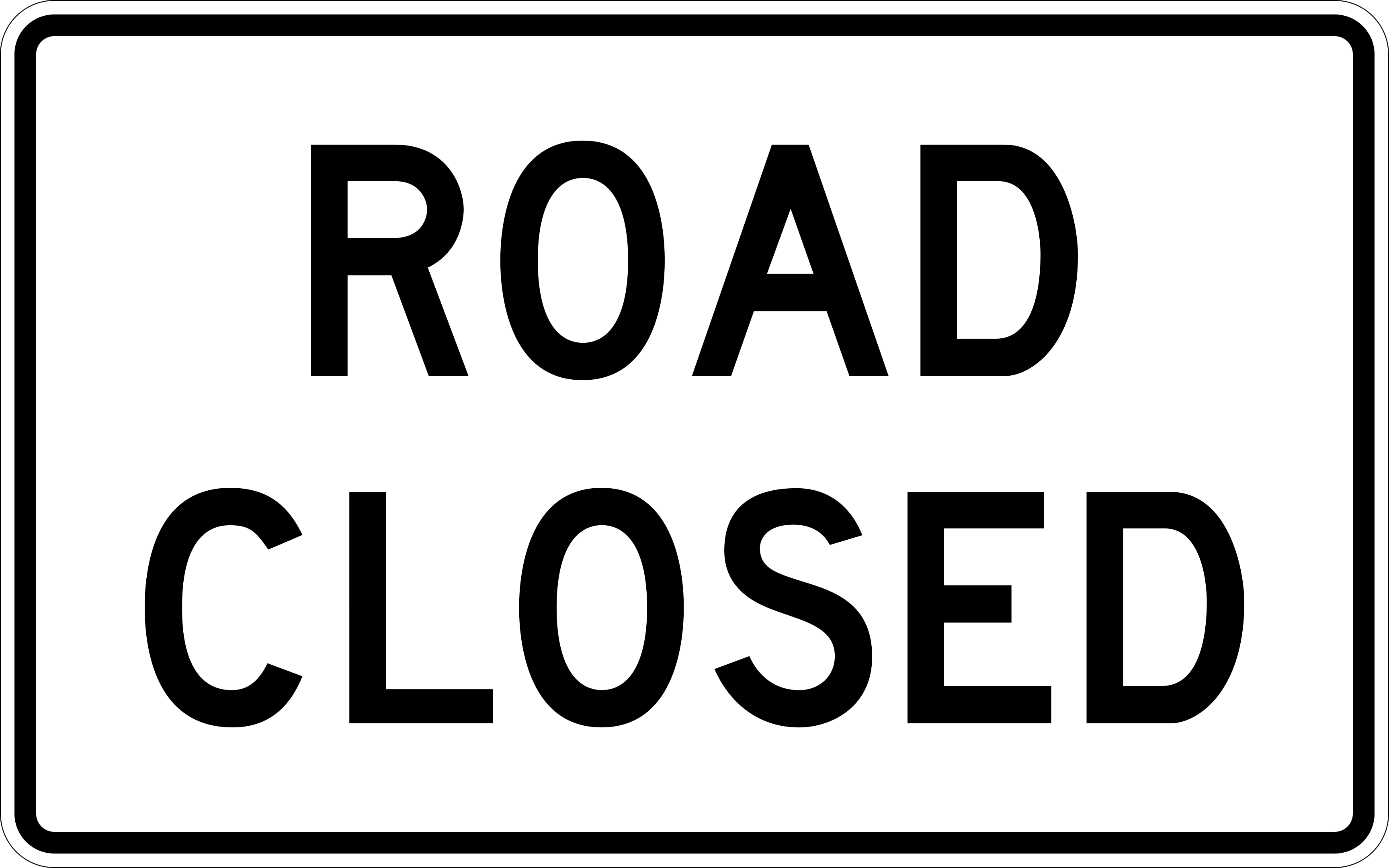
Road closed
Nobody drives past this point except authorized vehicles.
White horizontal rectangle with the words ROAD CLOSED · MUTCD 2B.63
Warning signs (32)
Mostly yellow diamonds. They tell you what the road is about to do, so you can slow down in time.
-
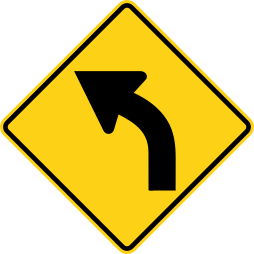
Curve
The road bends ahead: slow down before the curve.
Yellow diamond with a bent arrow · CA handbook p. 37 · MUTCD 2C.07
-
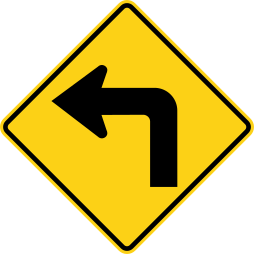
Sharp turn
A tight turn ahead, usually taken at 30 mph or less.
Yellow diamond with a right-angle arrow · MUTCD 2C.07
-
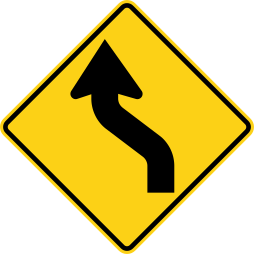
Reverse curve
Two curves in opposite directions, close together.
Yellow diamond with an S-shaped arrow · MUTCD 2C.07
-
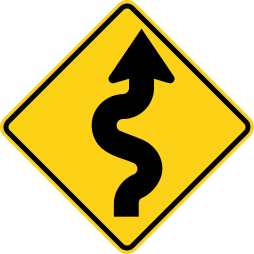
Winding road
Three or more curves follow one after another.
Yellow diamond with a wavy arrow · CA handbook p. 37 · MUTCD 2C.07
-
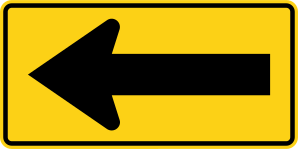
Large arrow
The road changes direction sharply the way the arrow points.
Yellow horizontal rectangle with a big arrow · CA handbook p. 37 · MUTCD 2C.10
-

Crossroad
Another road crosses yours ahead: watch for cars turning or entering.
Yellow diamond with a cross · CA handbook p. 37 · MUTCD 2C.41
-

Side road
A side road meets yours at an intersection ahead: watch for cars turning in or out.
Yellow diamond with a branch to one side · MUTCD 2C.41
-

T intersection
Your road ends ahead at a crossing road, so you will have to turn.
Yellow diamond with a T · CA handbook p. 37 · MUTCD 2C.41
-

Y intersection
The road splits into two branches ahead.
Yellow diamond with a Y · MUTCD 2C.41
-
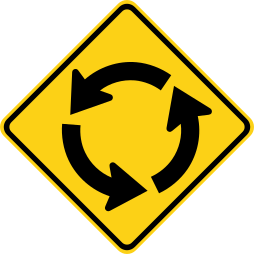
Roundabout ahead
A roundabout is coming: slow down and yield to the traffic already in it.
Yellow diamond with three curved arrows · CA handbook p. 40 · MUTCD 2C.41
-

Stop ahead
There is a stop sign ahead that you may not see in time.
Yellow diamond with a small stop sign · CA handbook p. 37 · MUTCD 2C.35
-

Yield ahead
A yield sign is coming up: get ready to give way.
Yellow diamond with a small yield sign · CA handbook p. 37 · MUTCD 2C.35
-
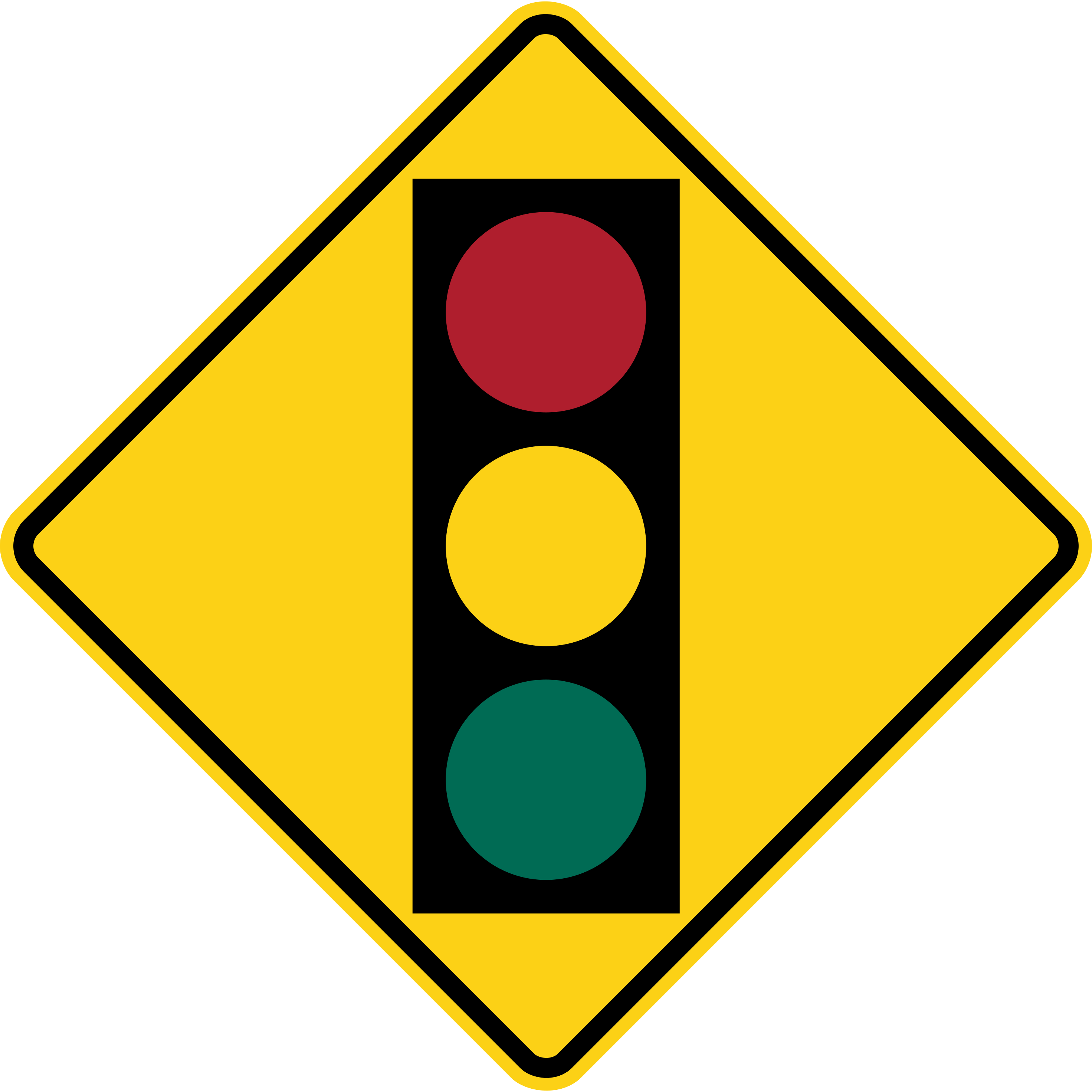
Signal ahead
A traffic light is ahead, out of sight until you are close.
Yellow diamond with a traffic light · CA handbook p. 37 · MUTCD 2C.35
-
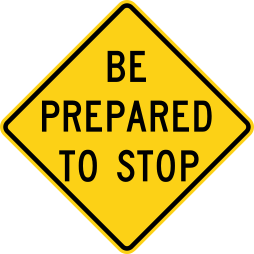
Be prepared to stop
Traffic ahead may be stopped, often by a signal.
Yellow diamond with the words BE PREPARED TO STOP · MUTCD 2C.35
-
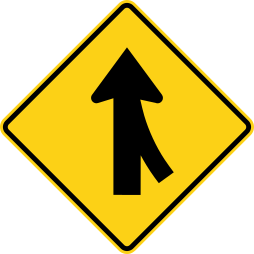
Merging traffic
Two roads come together into one lane ahead: watch for cars merging.
Yellow diamond with two lines joining · CA handbook p. 37 · MUTCD 2C.45
-
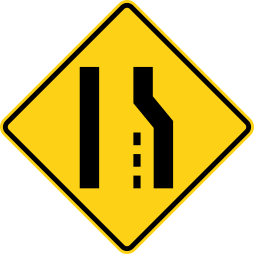
Lane ends
One lane runs out ahead: be ready to merge into the other.
Yellow diamond with one line bending in · CA handbook p. 37 · MUTCD 2C.47
-
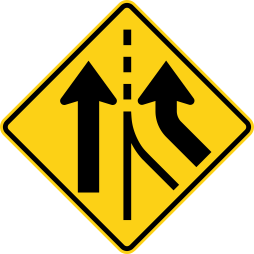
Added lane
A road joins with its own lane, so no one has to merge.
Yellow diamond with two parallel arrows · CA handbook p. 37 · MUTCD 2C.46
-
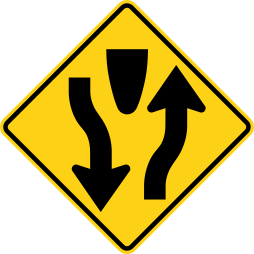
Divided highway
A median will separate the two directions of traffic ahead.
Yellow diamond with arrows around a median · CA handbook p. 37 · MUTCD 2C.20
-
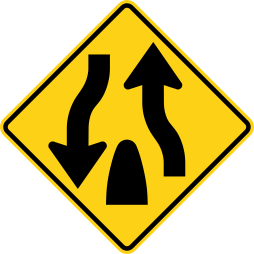
Divided highway ends
The median ends ahead and oncoming traffic will share the road.
Yellow diamond with the median closing · CA handbook p. 37 · MUTCD 2C.21
-
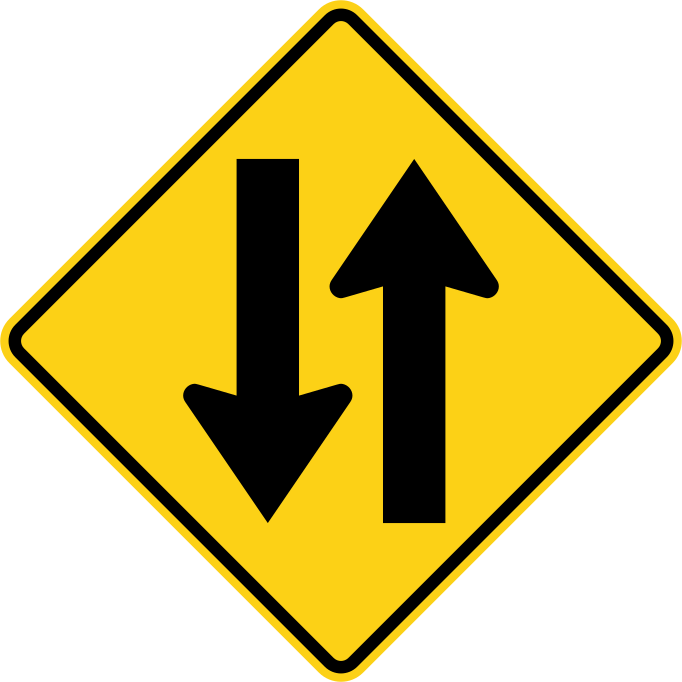
Two-way traffic
Traffic will be coming toward you on this road.
Yellow diamond with arrows up and down · CA handbook p. 37 · MUTCD 2C.51
-
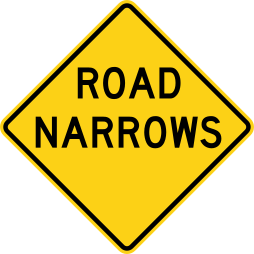
Road narrows
The pavement gets narrower ahead and two cars may not fit side by side at speed.
Yellow diamond with the words ROAD NARROWS · MUTCD 2C.17
-
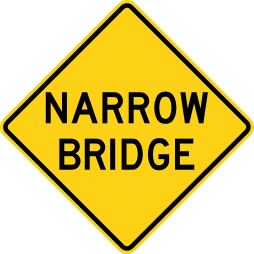
Narrow bridge
The bridge ahead is narrower than the road leading to it.
Yellow diamond with the words NARROW BRIDGE · MUTCD 2C.18
-
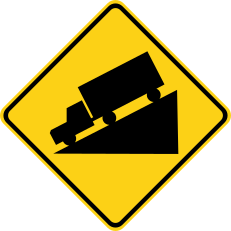
Hill
A long or steep downgrade is ahead: control your speed.
Yellow diamond with a truck on a slope · MUTCD 2C.14
-
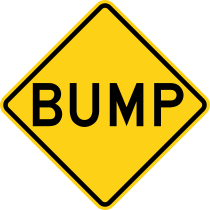
Bump
A sharp rise in the road surface is ahead.
Yellow diamond with the word BUMP · MUTCD 2C.26
-
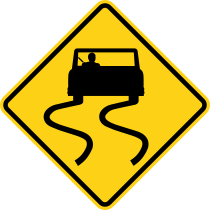
Slippery when wet
This pavement can turn unusually slippery when it is wet.
Yellow diamond with a skidding car · CA handbook p. 37 · MUTCD 2C.30
-
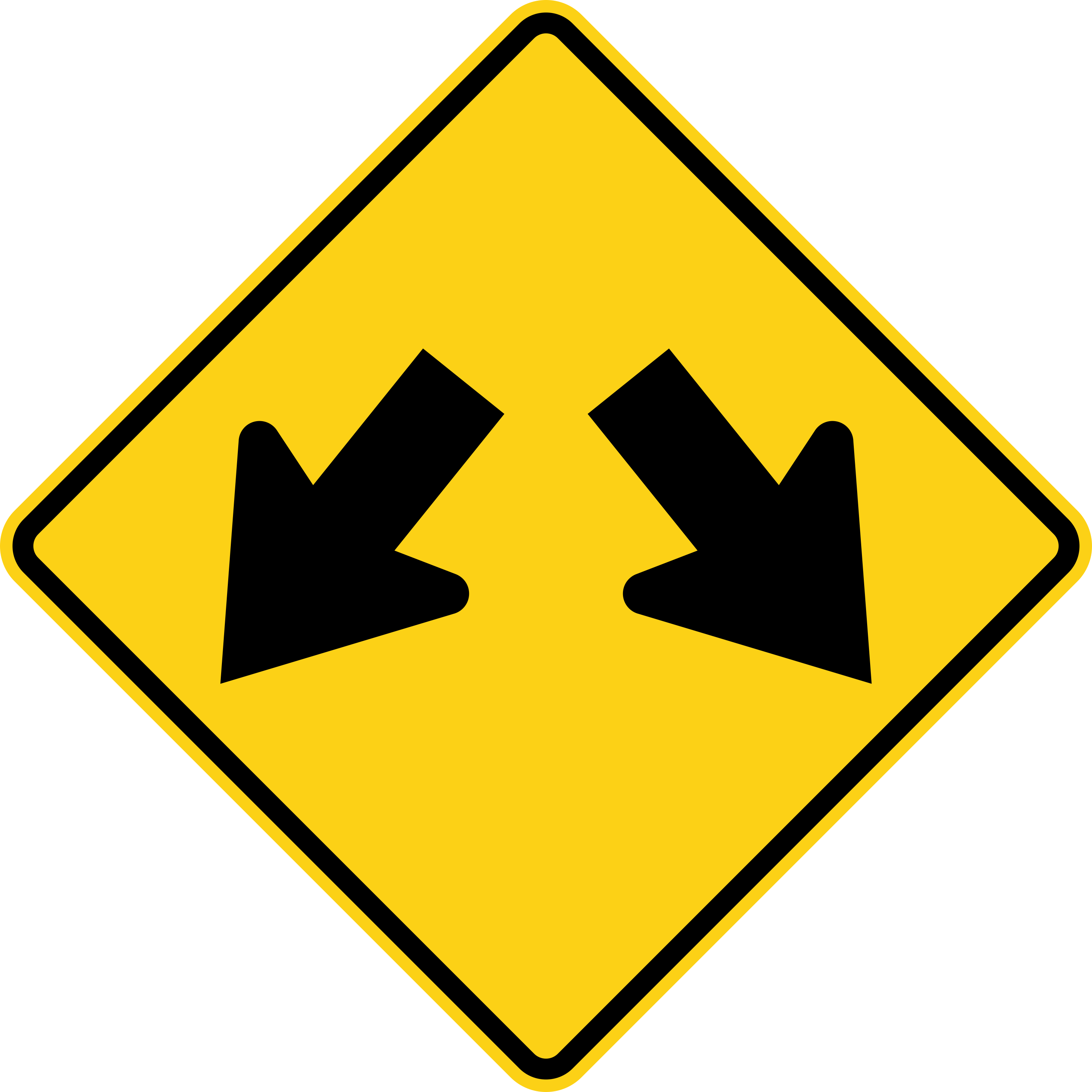
Double arrow
You may go around the island or obstacle ahead on either side.
Yellow diamond with arrows to both sides · MUTCD 2C.23
-
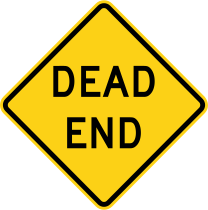
Dead end
This street stops without connecting to another one.
Yellow diamond with the words DEAD END · MUTCD 2C.24
-
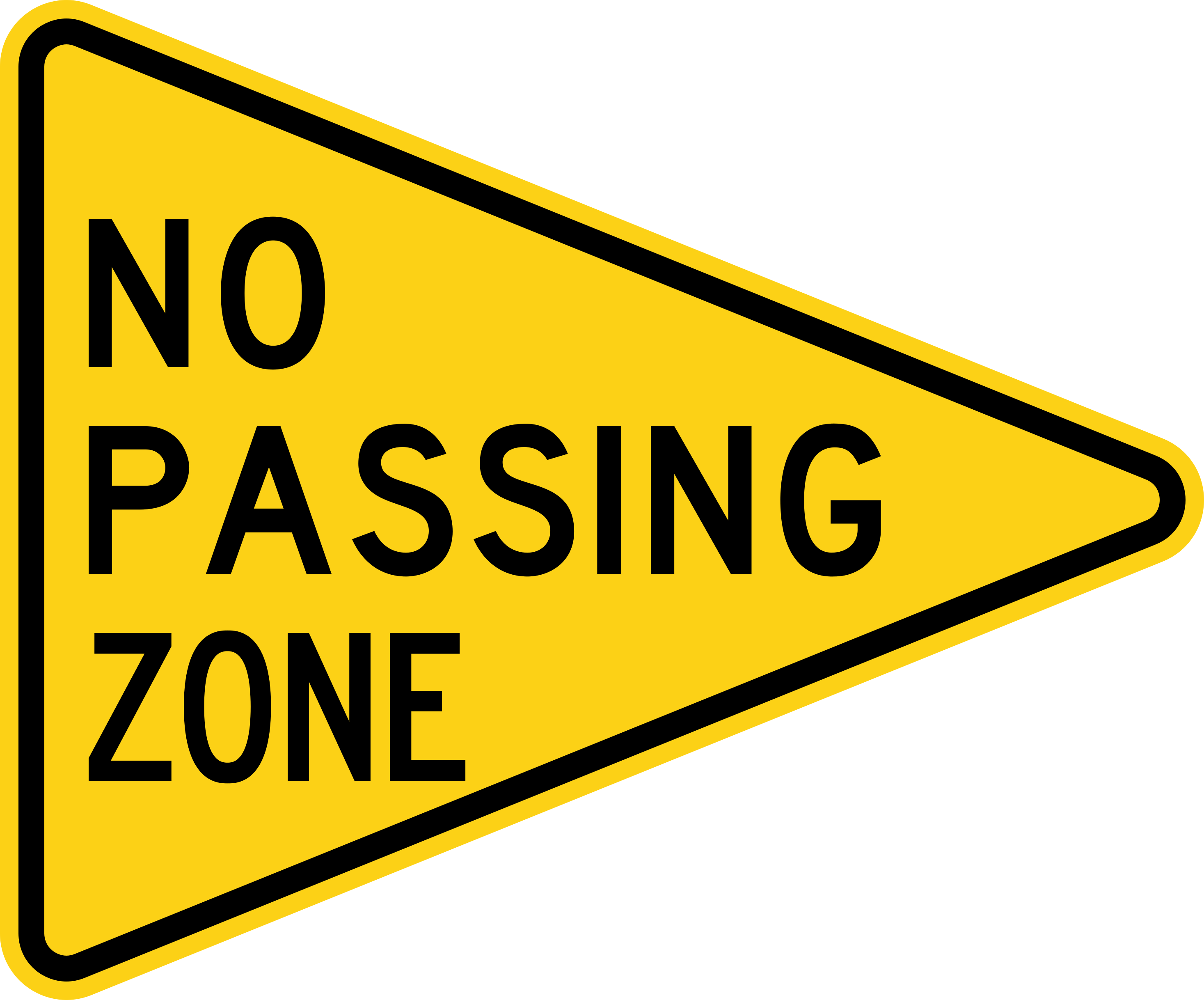
No passing zone
A zone where you may not pass starts here.
Yellow pennant reading NO PASSING ZONE, on the left side of the road · MUTCD 2C.53
-
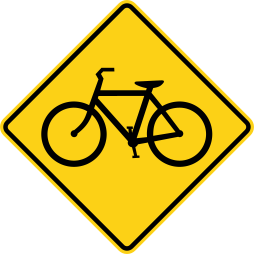
Bicycles
Bicyclists may be riding on or entering the road ahead.
Yellow diamond with a bicycle · CA handbook p. 38 · MUTCD 2C.54
-
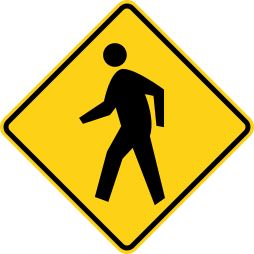
Pedestrian crossing
People on foot may be crossing ahead.
Yellow diamond with a person walking · CA handbook p. 37 · MUTCD 2C.55
-
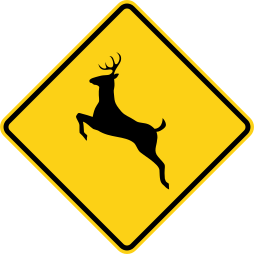
Deer crossing
Deer may be on or crossing the road.
Yellow diamond with a deer · CA handbook p. 46 · MUTCD 2C.55
-
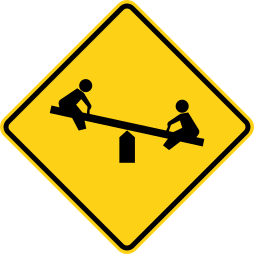
Playground
A children's playground sits next to the road ahead.
Yellow diamond with children playing · CA handbook p. 38 · MUTCD 2C.56
School signs (1)
A five-sided sign means a school is close by.
-

School
A school is close: slow down and watch for children.
Five-sided fluorescent yellow-green sign · CA handbook p. 38 · MUTCD 7B.02
Railroad signs (2)
The round yellow sign comes first; the crossbuck stands at the tracks.
-

Railroad ahead
Railroad tracks ahead: look, listen, be ready to stop.
Round yellow sign with an X and the letters RR · CA handbook p. 38 · MUTCD 8B.06
-
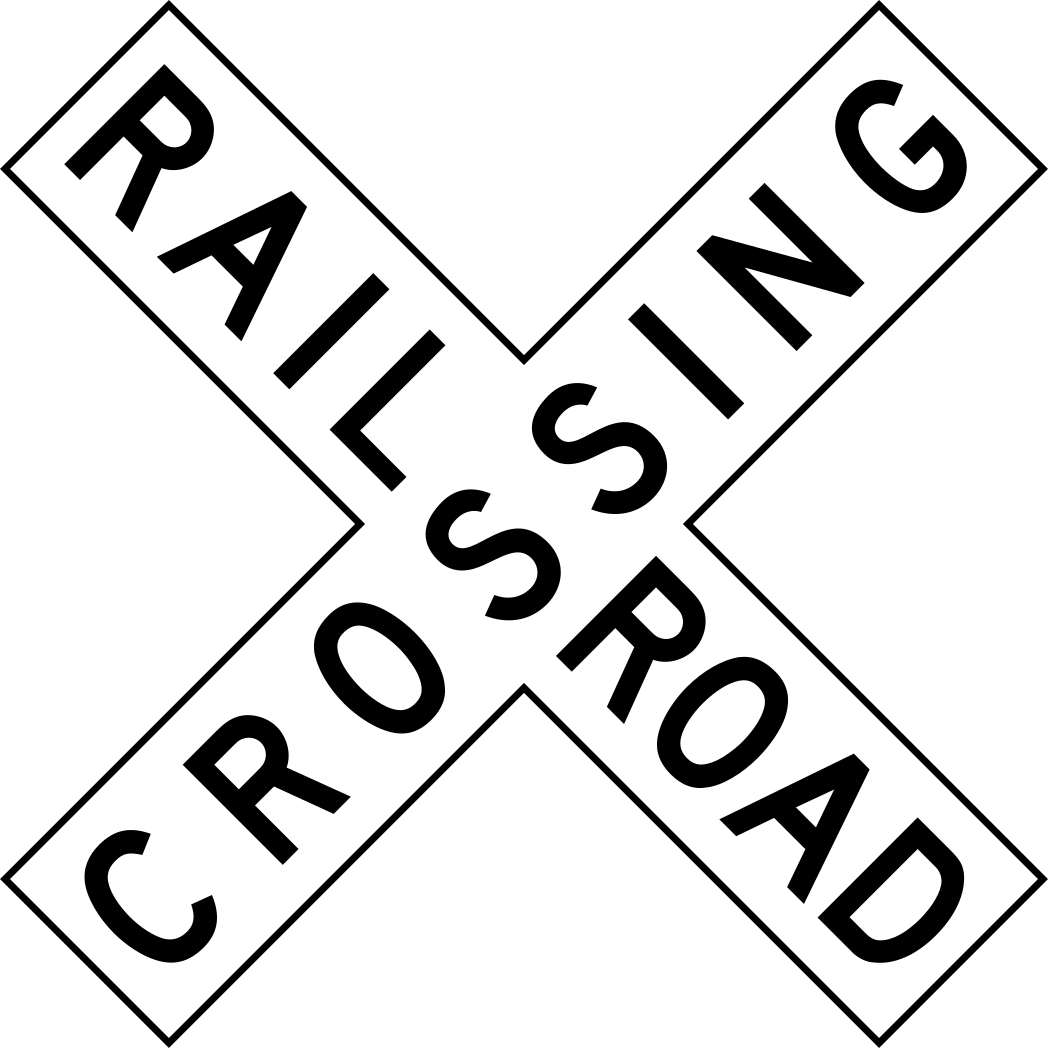
Railroad crossing
A railroad crossing: let any train go by first.
White crossbuck (X) with the words RAILROAD CROSSING · CA handbook p. 38 · MUTCD 8B.03
Work zone signs (1)
Orange means temporary: people and machines working on or next to the road.
-
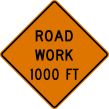
Road work ahead
Workers or equipment are on the road ahead: slow down and expect changes.
Orange diamond with the words ROAD WORK · CA handbook p. 49 · MUTCD 6H.03
Where the signs and meanings come from
The drawings follow the federal Manual on Uniform Traffic Control Devices, the national standard for every sign on US public roads, published by the Federal Highway Administration and in the public domain. The drawing files come from Wikimedia Commons, where each one is released into the public domain, and that license was checked file by file before it was added.
The meanings are our own short wording of what each sign requires. Every one is backed by the section of the federal manual that defines the sign and, when the California Driver's Handbook covers the sign or its rule, by that page of the handbook. The list above has all 54 signs with their references, so you can check any of them.
For the reasoning behind shapes, colors, signals and the lines on the pavement, read the California road signs guide. When the signs stop slowing you down, take a full California practice test.
Ready for the whole test, not only the signs?
California practice test