
California · DMV
California road signs, signals and pavement markings
What a shape tells you before you can read the words, why an arrow is never the same rule as a round light, and what each line painted on the road allows.
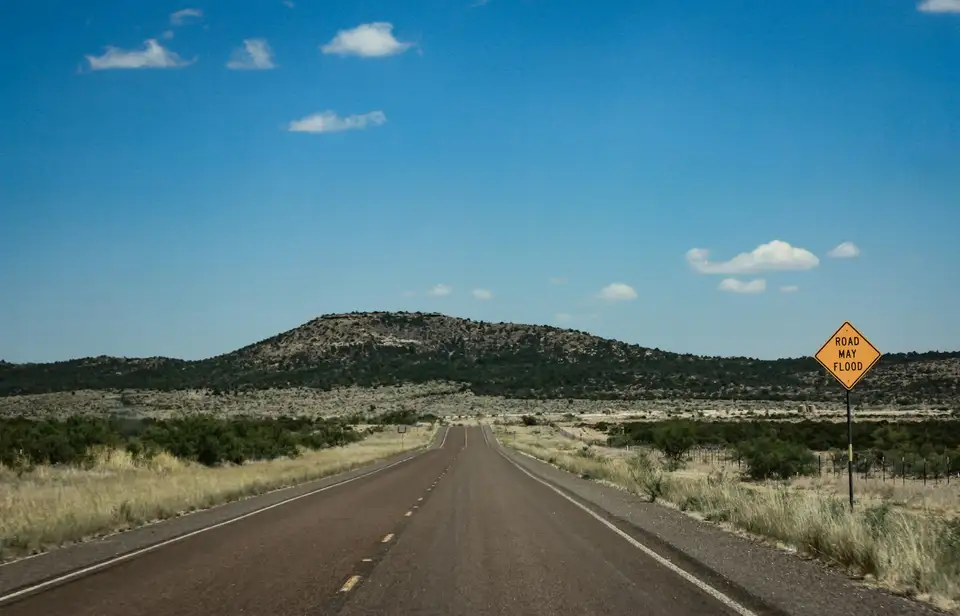
The shape carries the message
Signs are built so that you can act on them before you have read them. At speed, and at the distance where a sign is still useful, what reaches you first is the outline and the color; the words arrive later, and sometimes not at all if the sign is dirty or the light is bad.
That is why the test asks about shapes rather than about wording. It is asking whether you would slow down in the right place with the sign only half read, which is how signs get used in practice.
- A sign with five sides tells you a school is close: slow down and stop for children who are in the crosswalk. p. 38
- A round yellow sign with a black cross, or a crossbuck shaped like an X, warns you that railroad tracks are ahead. Look and listen, slow down, be ready to stop and let any train go by. p. 38
- A diamond warns you about the road itself: something about the conditions or a danger further on. p. 38
- A white rectangle states a rule you have to obey, and there are a lot of them. p. 38
- A red circle with a red slash through it means the thing drawn inside is what you may not do, sometimes with words added. p. 38
- A red and white regulatory sign is an instruction to follow literally: DO NOT ENTER means that road or that ramp is closed to you. p. 38
- DO NOT ENTER and WRONG WAY signs appear where you have driven against traffic. Back out or turn around once it is safe; at night the giveaway is road reflectors that come back red in your headlights. p. 38
- Warning signs also cover people rather than pavement: pedestrians, bicyclists, schools, playgrounds, school buses and the zones where buses load passengers. p. 38
- Obey a warning sign whatever its shape or color. p. 35
-
 School
A school is close: slow down and watch for children.
pentagon · p. 38
-
 Railroad ahead
Railroad tracks ahead: look, listen, be ready to stop.
round yellow · p. 38
-
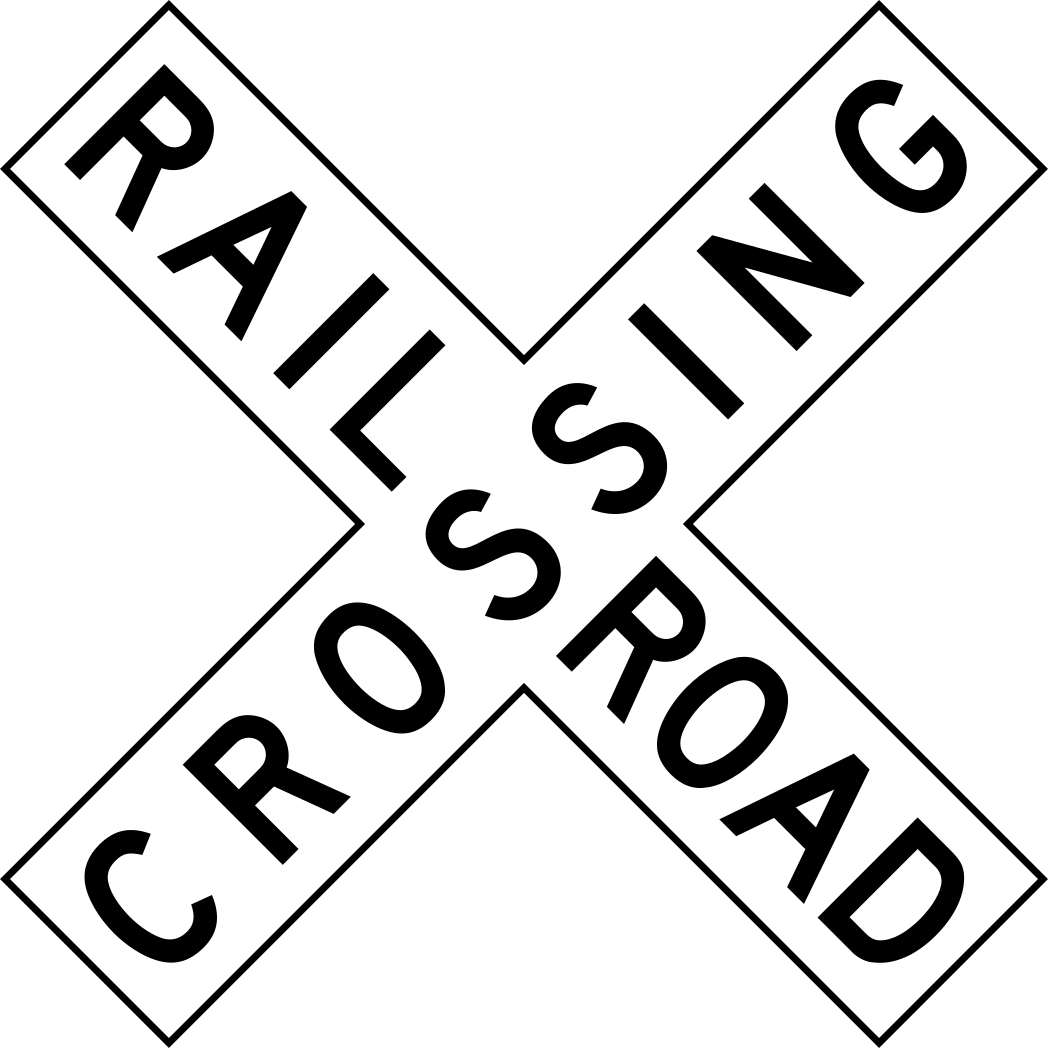 Railroad crossing
A railroad crossing: let any train go by first.
crossbuck (X) · p. 38
-
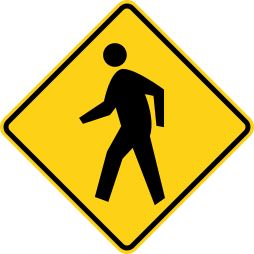 Pedestrian crossing
A warning: people on foot may be crossing.
diamond · p. 38
-
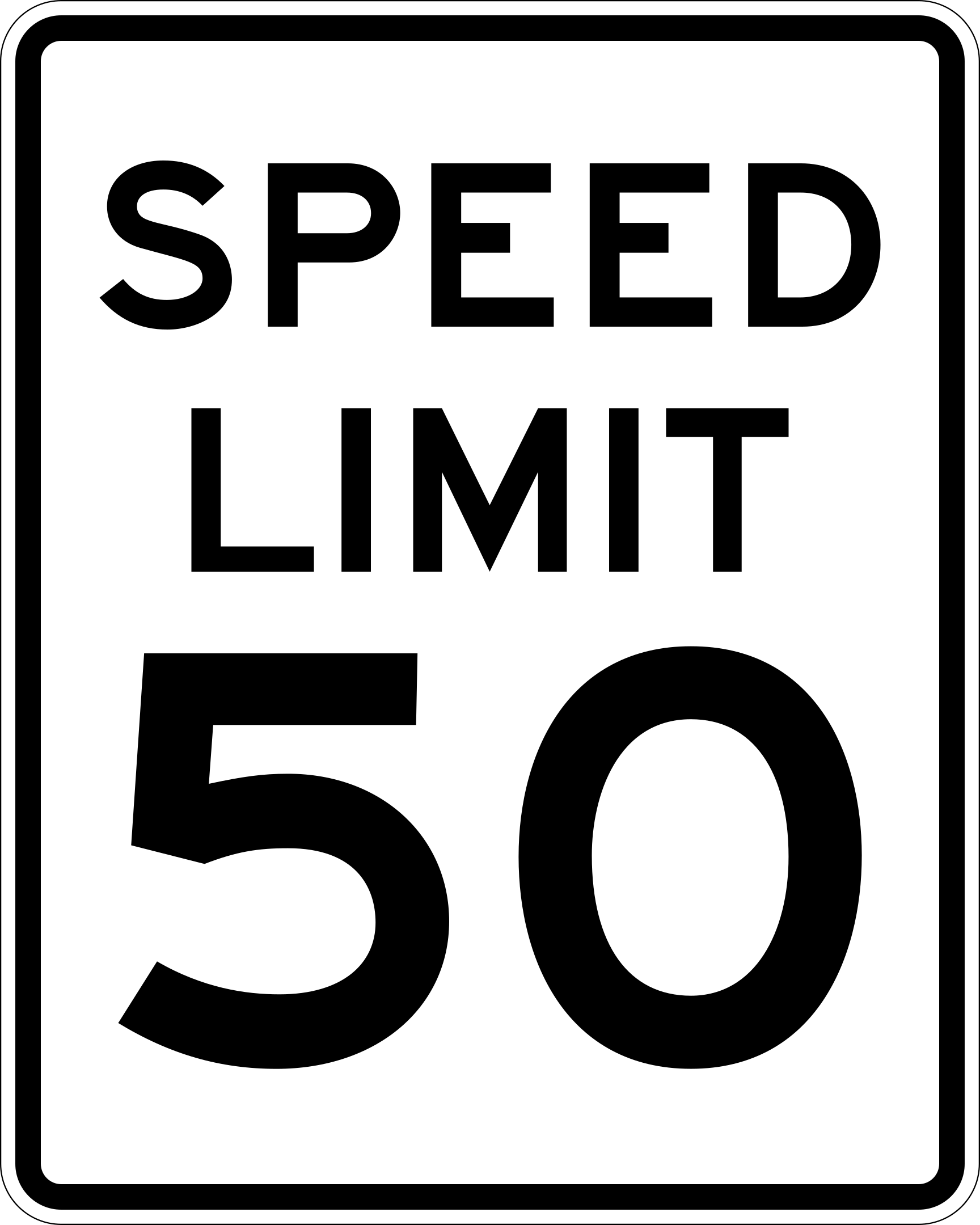 Speed limit
A rule you have to obey.
white rectangle · p. 38
-
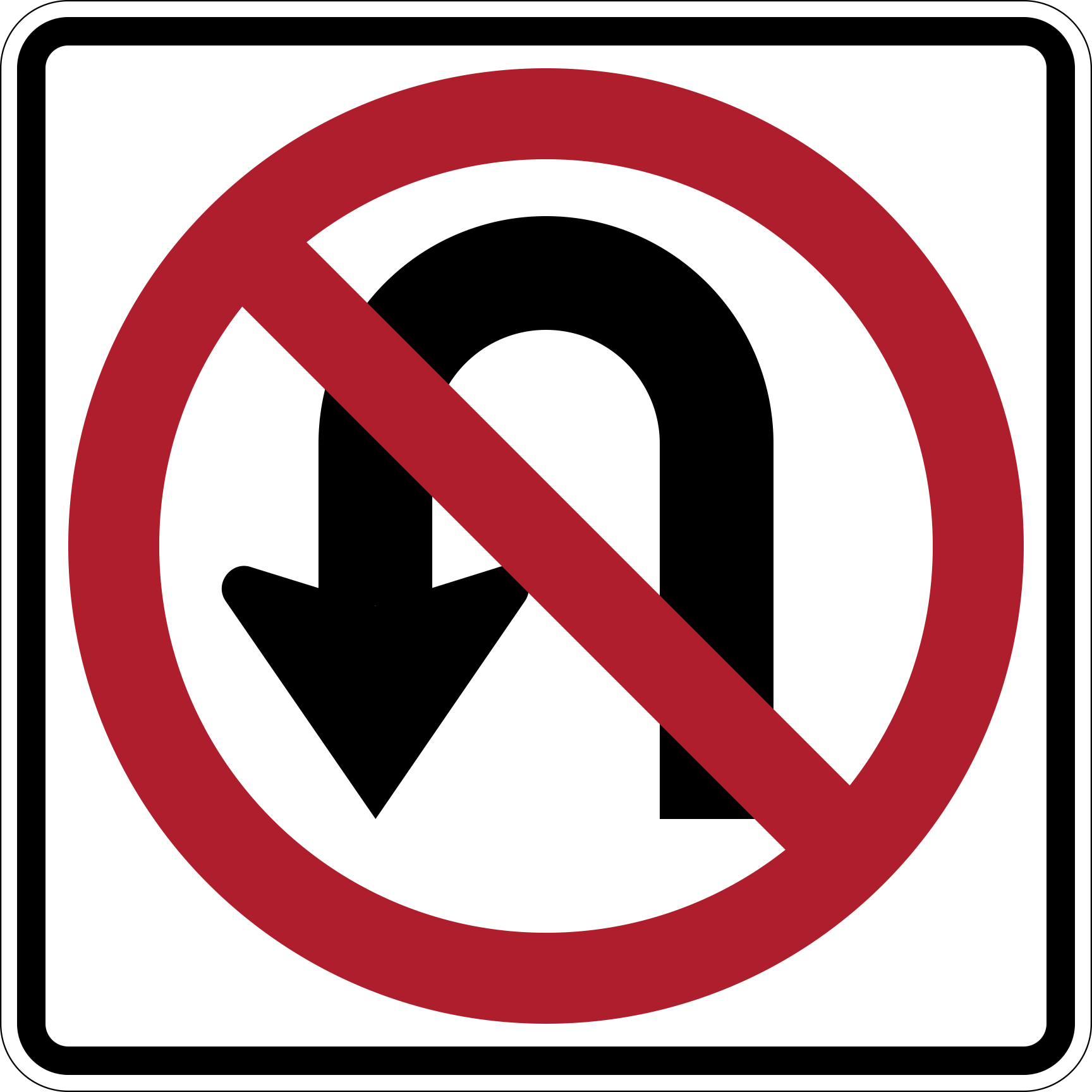 No U-turn
What is drawn inside is not allowed.
red circle with a slash · p. 38
-
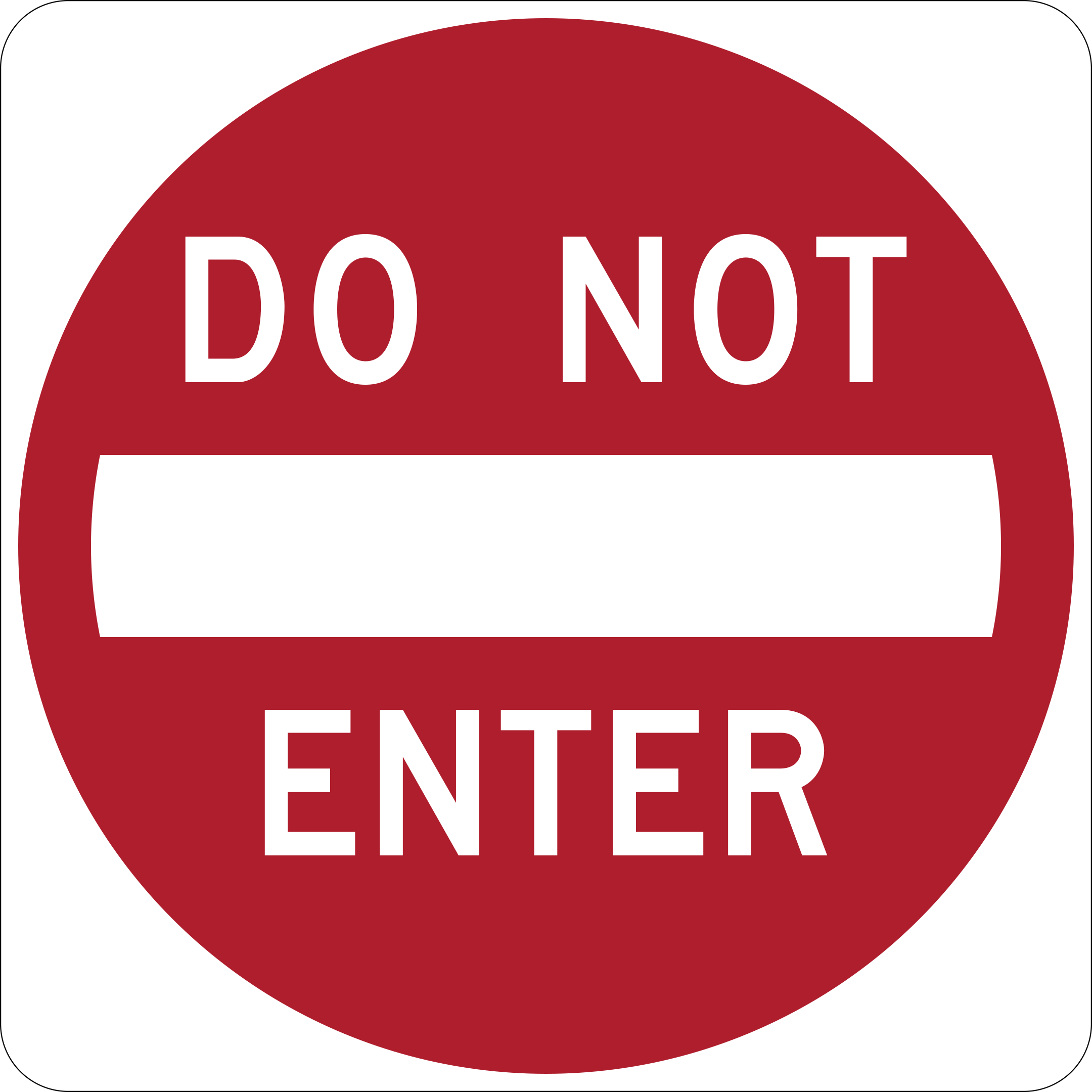 Do not enter
That road or ramp is closed to you.
circle on a square · p. 38
-
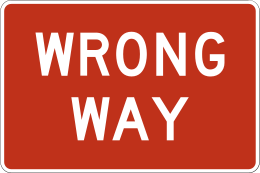 Wrong way
You are driving against traffic: get out once it is safe.
rectangle · p. 38
An arrow is not the same rule as a round light
Almost every signal question on a California test comes down to one distinction: a round light governs everyone at that intersection, and an arrow governs one movement. The rules are deliberately different, and the difference is most expensive on red.
The other half of the topic is what a color asks of you rather than what it permits. Yellow is not a shorter green; it is an instruction to stop if stopping is still the safe thing to do. Green is not a right of passage; it is permission to go if the space on the far side is there.
- Red means stop. You may still turn right on it, as long as no sign forbids the turn, you have come to a stop at the limit line, you have given way to people crossing, and the turn is safe. p. 33
- A red arrow also means stop, and it allows no turn at all. You wait until a green light or a green arrow shows up. p. 33
- A red light that flashes works like a stop sign: stop first, then go when it is safe. p. 33
- Yellow means caution and warns you that red is next. Stop if you can do it safely; if you cannot, cross carefully. p. 33
- A yellow arrow says your protected turn is running out. If you are already in the intersection or cannot stop safely, finish the turn with care, then watch for what comes next: a green or red light, or a red arrow. p. 33
- A yellow arrow that flashes lets you turn without protection. Give way to oncoming traffic first and turn carefully. p. 34
- Green means go, and you still stop for anyone already in the intersection. Do not enter unless you can get all the way across before it turns red. p. 34
- A green arrow gives you a protected turn in the direction it points: oncoming traffic is being held by a red light. p. 34
- A yellow light that flashes is a warning, not a stop. Slow down and stay alert. p. 34
- When the signal is dead, treat the intersection as if every corner had a stop sign, then go when it is safe. p. 34
Pedestrian signals, from the driver seat
These signals are not aimed at you, which is exactly why they get tested. What the test wants to know is whether a signal telling someone else not to start crossing changes anything about your obligation to the person already in the road. It does not.
- A walking figure, or the word WALK, tells a person on foot they may cross; a raised hand, or DON'T WALK, tells them they may not. p. 35
- When the hand or the words are flashing, nobody should start crossing: the signal is about to change. Drivers still have to yield to the people already out there, flashing hand or not. p. 35
- The digits on a pedestrian signal are a countdown of the seconds left to finish crossing. p. 35
- Some intersections have crisscross and diagonal crosswalks that let people cross in any direction at once, and only while the walk signal is on. p. 35
- Beeps, chirps and spoken messages are there so that blind or visually impaired pedestrians can cross; the button at the corner is what turns the walk signal on. p. 35
- Where there is no pedestrian signal at all, people on foot go by the vehicle signals. p. 35
Stop and yield signs
A stop sign question is almost always about where you stop, not whether you stop. The order matters because the first thing a stop protects is the crosswalk, and the limit line exists to keep you off it.
- At a stop sign, come to a full stop before the crosswalk, or at the limit line. Where there is neither, stop before you enter the intersection. Then check every direction before moving. p. 35
- A yield sign asks you to slow down and be ready to stop so that any vehicle, bicyclist or pedestrian can go through before you do. p. 35
- A yield line is a row of solid white triangles pointing back at the traffic that has to yield, and it marks where to give way or stop. p. 14
-
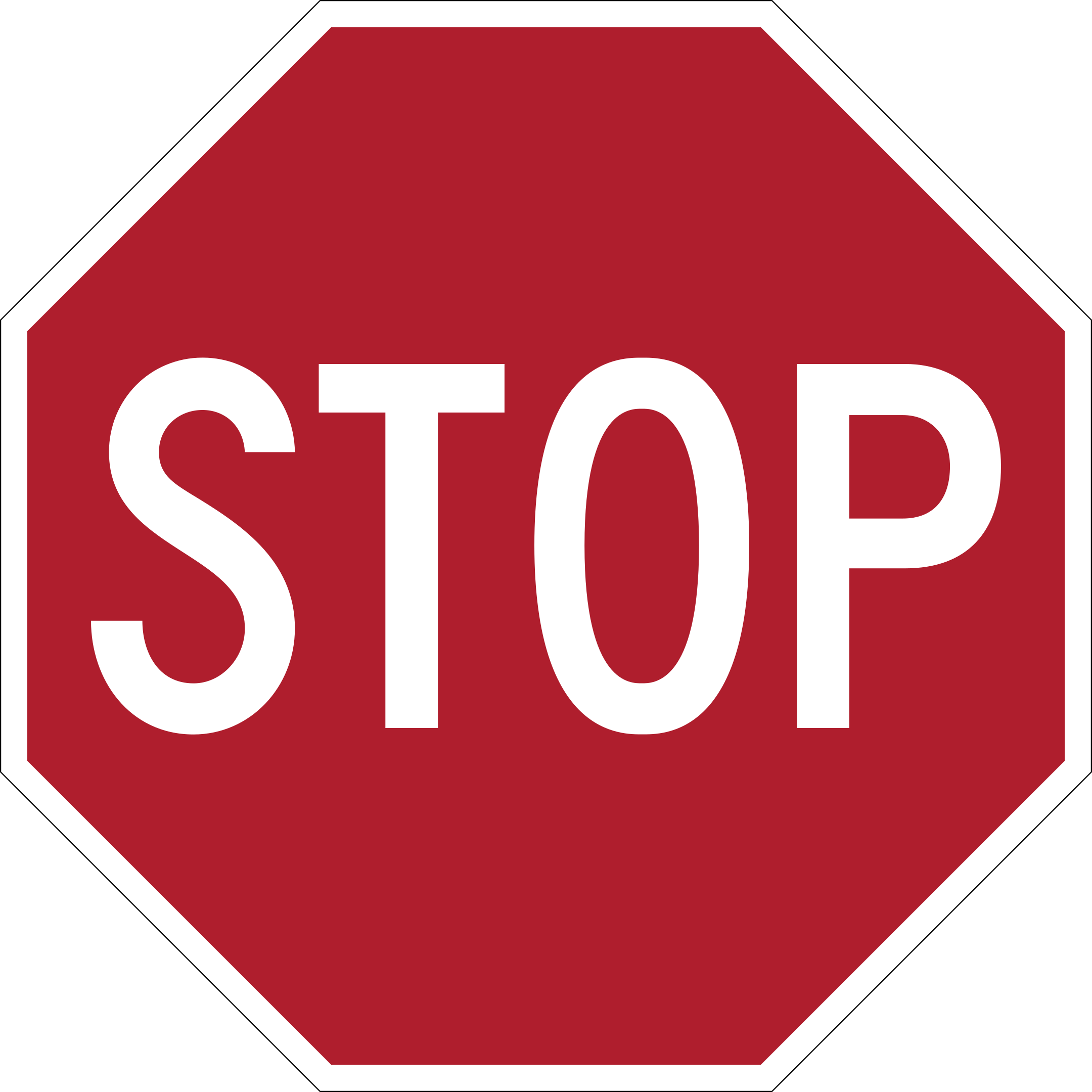 Stop
Come to a full stop, then go when it is safe.
octagon · p. 35
-
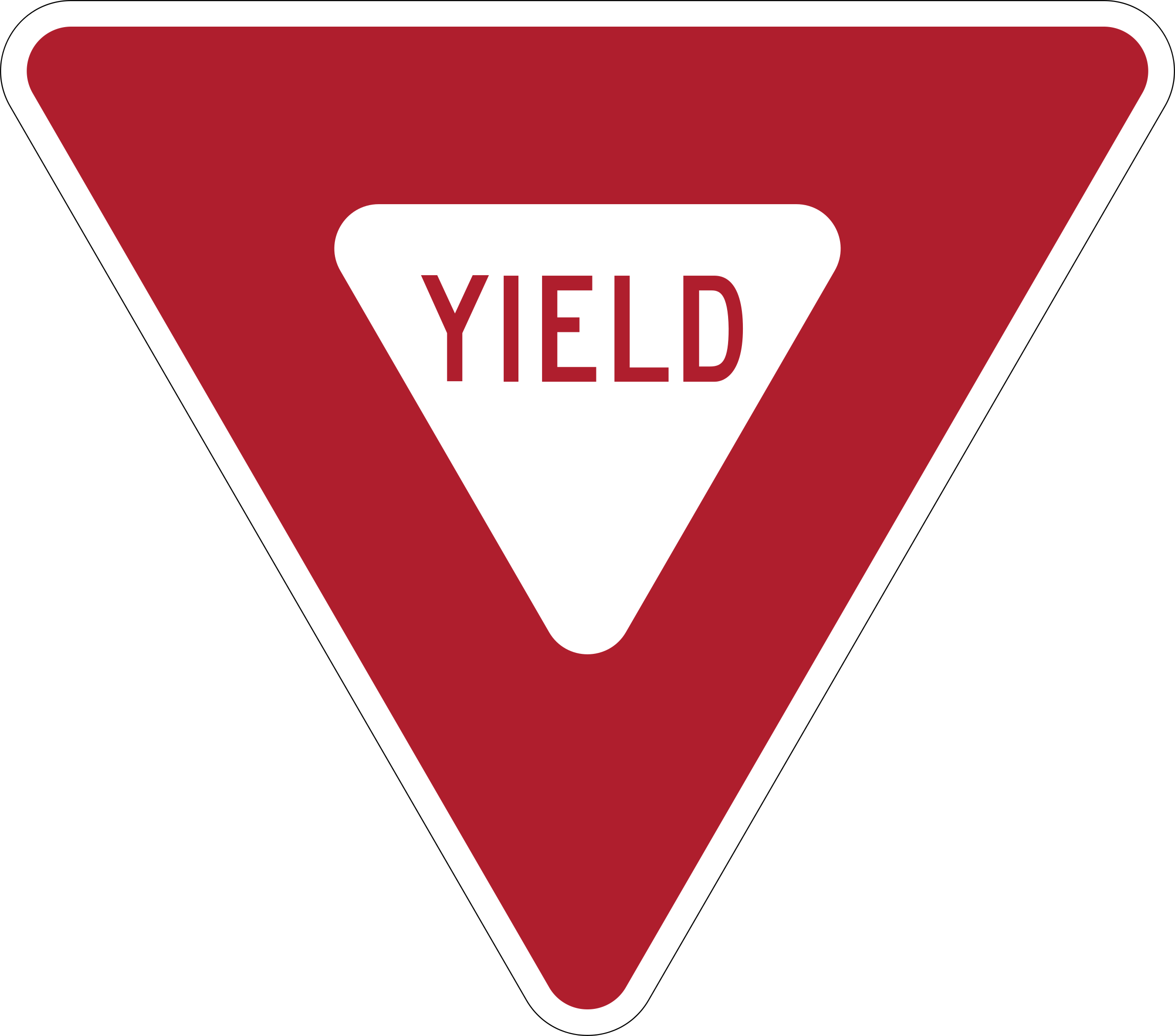 Yield
Slow down and be ready to stop to let others go first.
triangle · p. 35
The lines painted on the road
Pavement markings answer one question: what is on the other side of that line. Yellow means traffic coming towards you, white means traffic going the same way you are. Once that is fixed, the rest of the rules stop being a list to memorise and start being obvious.
The part worth studying twice is the difference between a line you may cross under some conditions and a line that is a wall. Two of them look almost identical from the driver seat, and only one of them lets you turn left across it.
- One solid yellow line marks the middle of a road carrying traffic in both directions. With that line on your side and a single lane going your way, you do not pass. p. 13
- A broken yellow line next to your lane means you may pass, once it is safe. p. 13
- Stay right of double solid yellow lines. You may cross a single set to turn left into or out of a driveway or private road or to make a U-turn, to reach a carpool lane whose entrance is on the left, or where construction signs route you onto the other side because yours is closed. p. 13
- Two sets of double yellow lines two feet apart or more are a barrier. You do not drive over it, turn left across it or make a U-turn through it, except where there is a designated opening. p. 13
- One solid white line separates lanes that are all going the same way, one-way streets included. p. 13
- Double solid white lines divide an ordinary lane from a preferential one such as a carpool lane, and they also turn up around freeway ramps. You never change lanes across them: wait for a single broken white line. p. 14
- Broken white lines separate the lanes on a road with two or more of them running the same direction. p. 14
- Large broken lines mean the lane you are in is ending, on a street or on a freeway. Look for the sign that tells you whether to exit or merge. p. 14
Name that sign
What does this sign ask of you?
More signs to practice: the road sign games cover 54 of them, with a memory game, a matching game and a one-minute sprint.
Why this matters: California by the numbers
- Running a red light was the primary cause of 19,372 California crashes in 2024. What causes crashes
- Not stopping at a stop sign was the primary cause of 6,253 California crashes in 2024. What causes crashes
- Running a red light: $486 and 1 DMV point. The full cost of a ticket
Now practice it
28 questions on signs, signals and pavement markings in the California question bank, each on its own page with the answer and the explanation, or take the full practice test.
Sources
- California Driver's Handbook, Section 6: Navigating the Roads
- California Driver's Handbook, Section 7: Laws and Rules of the Road
- FHWA Manual on Uniform Traffic Control Devices (sign drawings)
- Caltrans sign charts
How we write and check this material: our methodology.